October 1, 2025
Article
ChatGPT Checkout and the Future of Ticketing
ChatGPT Checkout has just arrived, and it could radically reshape ticketing
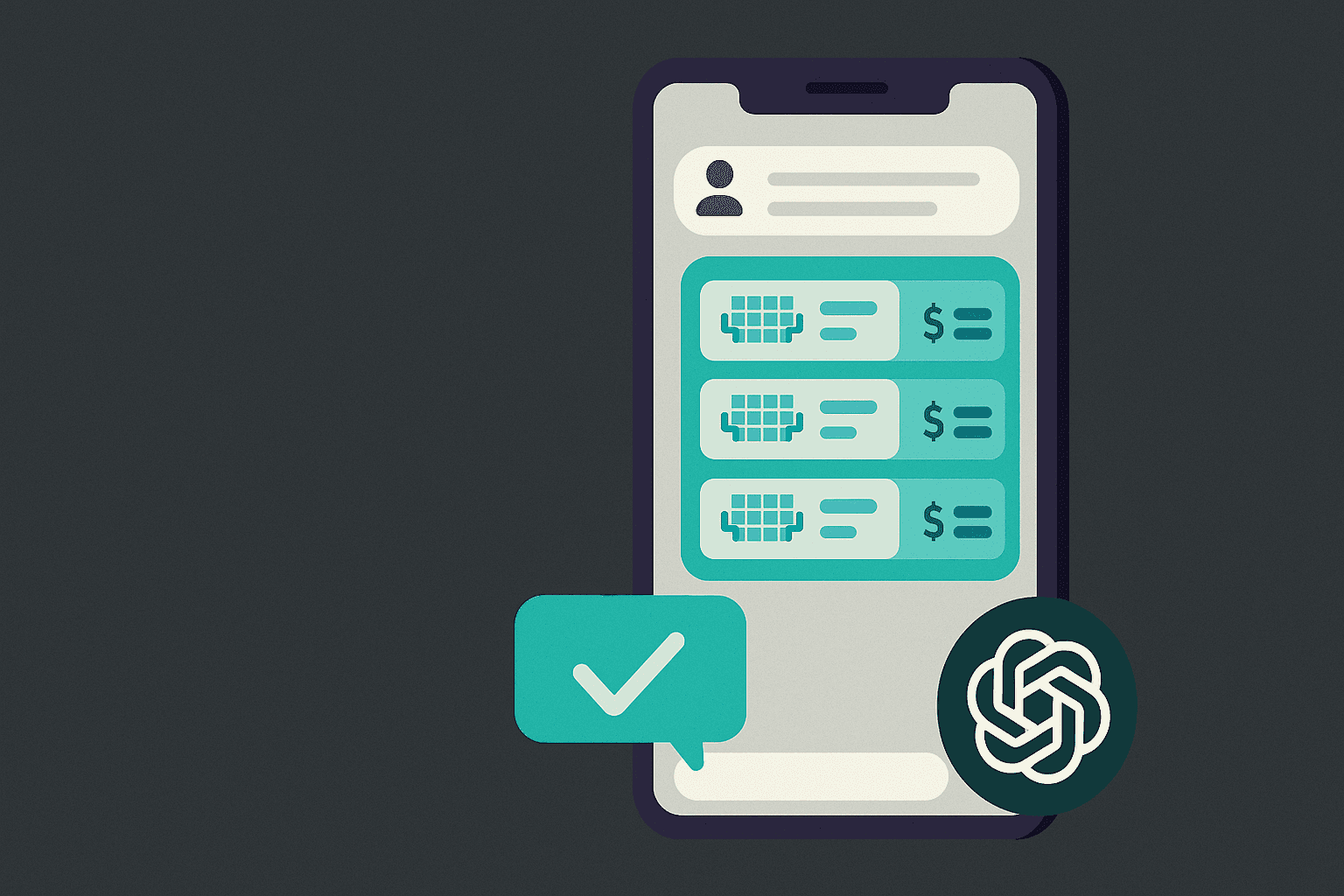
OpenAI’s announcement of ChatGPT Checkout marks a major milestone. Until now, conversational AI has mainly been used to answer questions, recommend products, or draft content. With this development, the conversation itself becomes a place to complete a transaction. A user can discover, decide, and buy without leaving the chat.
For many industries, this is an incremental shift. For ticketing, it has the potential to be transformative. Buying a ticket is rarely a one-click journey. It usually involves navigating seat maps, comparing price types, choosing between dates or performances, sometimes adding hospitality packages, memberships, parking or pre-orders. The richness of options is what makes live events appealing, but it is also what makes ticketing so complex.
That complexity is exactly why ChatGPT Checkout matters. Imagine a fan saying, “Book me two seats for the Friday show of Hamilton, ideally stalls, but if that’s too expensive then circle is fine.” Today, most ticketing systems would struggle to interpret that request. In the near future, audiences will expect AI to handle the conversation, resolve the conditions, and present a clean summary before confirming the purchase. If the ticketing system behind the scenes cannot provide structured data, clear seat options, and transparent rules, the AI can’t do its job (or might make the transaction through a broker).
This changes the requirements for how ticketing systems and venues expose their data. In practical terms, it means APIs will need to be richer, more standardized, and designed with machine interpretation in mind. The recently introduced Agentic Commerce Protocol is a first step in that direction, and it will likely become a requirement for platforms that want to participate in AI-driven commerce. Ticketing providers will have to make sure their systems can explain not just “there are tickets available,” but “these exact seats, at these prices, with these eligibility rules.”
The implications extend beyond the technical layer. Venues and promoters will need to think differently about how offers are structured. Price types—student, member, concession, accessibility—have to be modeled in ways that an AI agent can present meaningfully in a conversational flow. Add-ons such as food and beverage packages or merchandise bundles will need the same clarity. Even something as human as customer support will have to be considered: if a customer asks, “Can I swap these for another date?” the AI should be able to give an accurate answer based on the venue rules.
Far from being a threat, this shift represents a strategic opportunity for the industry. A major challenge in ticketing has always been the drop-off between interest and purchase. Every extra step—loading a seat map, scrolling through price lists, registering for an account—increases the chance of abandonment. Chat-based checkout removes those hurdles. It keeps the customer in a natural conversation, guiding them smoothly from intent to confirmation. For venues, that means higher conversion, more direct engagement, and potentially new types of sales moments that happen outside traditional ticketing journeys.
It’s worth remembering how quickly past changes have become standard. A decade ago, mobile tickets were an experiment; now they’re the default. Contactless payments went from novelty to necessity almost overnight. ChatGPT Checkout may follow the same curve. Within a few years, customers may look at platforms that don’t support conversational purchasing as dated and inconvenient.
The question for the ticketing industry is not whether this technology will reshape how tickets are sold. It’s how soon. Those who start adapting their systems now—standardizing APIs, simplifying price structures, and preparing their data for AI-driven presentation—will be the ones ready to meet the next generation of audience expectations. For everyone else, the risk is clear: the buying journey will move to where the conversation is, whether or not the ticketing platform is ready.
In that light, ChatGPT Checkout isn’t just a new feature from OpenAI. It’s a signal that the way we sell live experiences is about to change.