September 24, 2025
Article
Oh no… we’ve built it all on email.
Email is the main channel for everything in ticketing - could that be a problem?
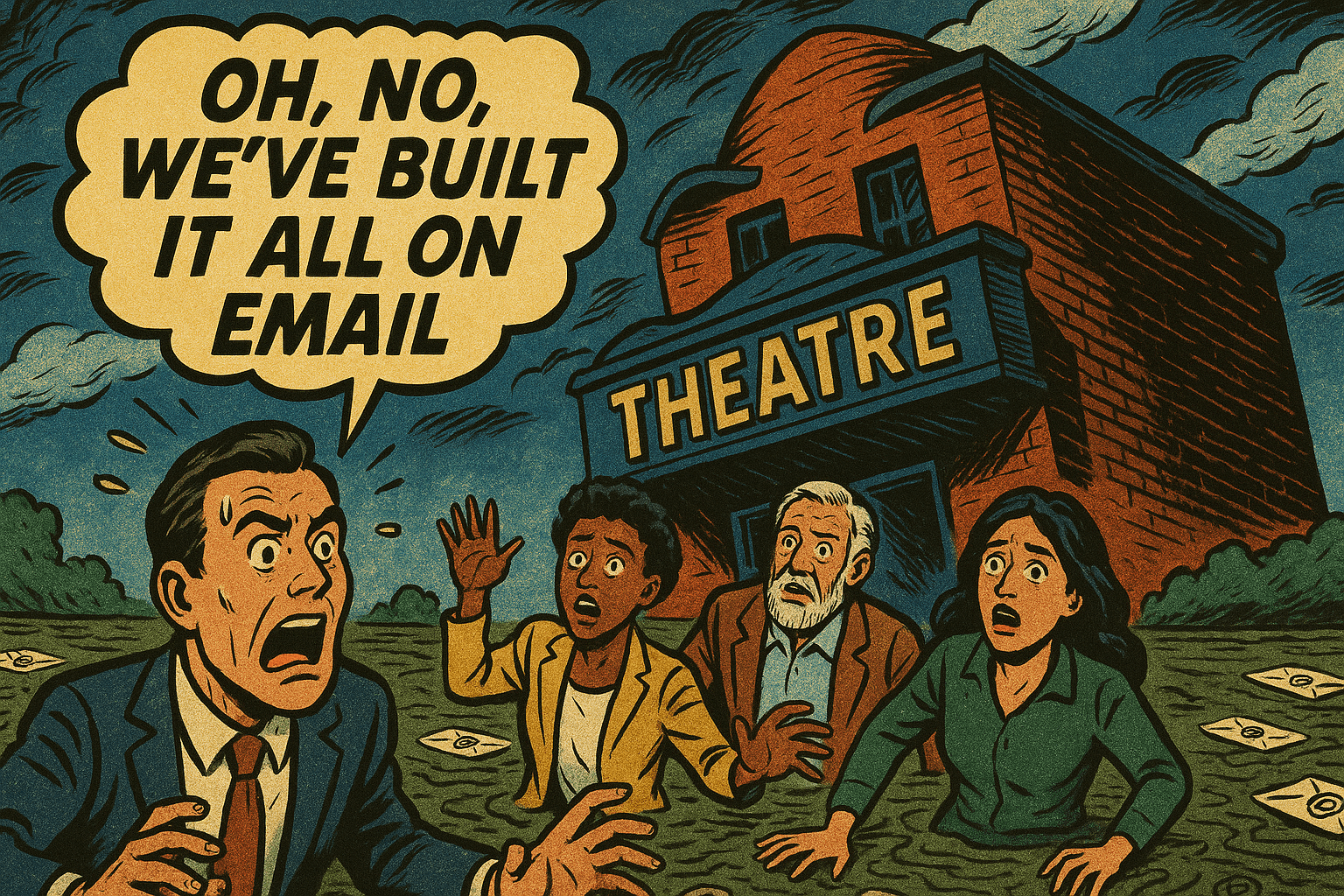
“Oh no… we’ve built it all on email.”
That was the phrase running through my head after some recent conversations with event organisers in cities with younger audiences. Great teams, exciting events, strong community engagement - but one recurring challenge:
Getting practical information through to the people who’ve bought a ticket.
We’ve spent the last 10–15 years moving all customer communication over to email. And for good reason: it replaced post, print, and phone calls with something faster, cheaper, more flexible, and trackable. For many organisations, it was a game changer.
But now we’re bumping into a new truth: Email isn’t where everyone is.
Especially not the youngest part of the audience.
I’ve heard more than one marketer say, only half-jokingly, “Our teenage audiences check their inbox when their grandma tells them she’s sent something.”
That doesn’t mean email is dead. It’s still a critical channel - just not always sufficient on its own. If you’re selling tickets to an under-30 crowd, relying solely on email for logistics, reminders, or upsells might mean you’re missing the moment. Or worse, missing them entirely.
The shift we’re seeing is simple: One channel no longer fits all.
Some organisations are starting to diversify their communication stack. Adding SMS. Using WhatsApp. Sending mobile tickets via text. Pinging last-minute changes by push notification. Not replacing email - just complementing it.
Tools like crowdEngage (which I’ve worked with) and VisitOne make it easy to add SMS as part of the flow - no app downloads, no overhauls, just a way to be where your audience already is. But the broader point is bigger than any one platform: If we want to serve the next generation of audiences, we have to keep evolving the way we talk to them.